Contact Center Performance Metrics: Top 10 KPIs to Track in 2026

Q-SuiteNG Platform, Asterisk vs Proprietary PBX, Asterisk for Cost-Effective Telephony, Asterisk Monitoring and Maintenance. Contact Center Intelligence, Contact Center Performance Metrics

Facebook Teaser Post

Wondering how top contact centers are thriving in 2026? Learn the 10 must-track KPIs that drive better service, higher satisfaction, and smarter operations. These contact center performance metrics could be your key to unlocking new success—read now! #ContactCenter #CXSuccess #KPIs2026
Contact Center Performance Metrics: Top 10 KPIs to Track in 2026

Contact center performance metrics are essential tools for ensuring consistent service quality, operational efficiency, and customer satisfaction. In 2026, high-performing contact centers rely heavily on data-driven insights to fine-tune their processes, optimize staffing, and meet ever-increasing customer expectations. These KPIs aren’t just numbers—they’re the heartbeat of an effective contact center.

Below, we’ll explore the ten most impactful KPIs that successful contact centers monitor—and how tracking them can elevate your performance.


Why Contact Center Metrics Matter in 2026

With customer service evolving rapidly, tracking the right contact center performance metrics is more crucial than ever. As expectations for faster, more personalized support grow, businesses must rely on measurable data to stay competitive. These metrics serve as benchmarks, guiding daily operations, training strategies, and long-term improvements.

Moreover, they enable managers to respond proactively to issues, rather than reacting after problems arise.


1. First Call Resolution (FCR)

Focus: Solving Issues the First Time

FCR measures how many customer inquiries are resolved during the first interaction, without the need for follow-ups. This metric directly impacts customer satisfaction and reduces the volume of repeat calls.

When teams track FCR consistently, they gain insights into agent performance and support process effectiveness.


2. Average Handle Time (AHT)

Balancing Speed and Quality

This metric tracks the average time it takes to handle a customer interaction—from start to finish. While faster is often better, rushing through calls can compromise service quality. That’s why leading contact centers aim for a healthy balance between speed and care.

By monitoring AHT, managers can identify both coaching opportunities and system inefficiencies.


3. Customer Satisfaction Score (CSAT)

Measuring the Customer Experience

CSAT is a real-time indicator of how satisfied customers feel after interacting with your team. Typically captured through surveys, this metric highlights what’s working and what needs improvement.

Additionally, comparing CSAT scores across channels can guide resource allocation.


4. Net Promoter Score (NPS)

Tracking Long-Term Loyalty

Unlike CSAT, NPS looks at long-term customer perception by asking one simple question: How likely are you to recommend our service? High NPS scores reflect strong brand loyalty, while low scores indicate a need for improvement in customer care.

Contact centers often use NPS results to refine customer journeys and agent engagement tactics.


5. Service Level (SL)

Speed of Response in Real Time

Service level measures the percentage of calls answered within a predefined time frame. It’s one of the most important contact center performance metrics for managing real-time customer experiences.

Maintaining strong service levels helps reduce customer frustration and keeps abandonment rates low.


6. Abandonment Rate

Understanding Why Customers Hang Up

This KPI tracks how often customers disconnect before speaking to an agent. A high abandonment rate usually points to excessive hold times or ineffective routing.

Improving this metric often requires re-evaluating your call flow, staffing plans, or queue strategies.


7. Agent Turnover Rate

Monitoring Workforce Stability

High-performing contact centers know that retaining skilled agents leads to better service. The agent turnover rate tracks how frequently team members leave and is a useful metric for assessing company culture, workload, and morale.

By addressing the root causes of turnover, organizations can improve both efficiency and employee satisfaction.


8. Occupancy Rate

Evaluating Agent Utilization

This KPI shows how much of an agent’s time is spent on active calls or tasks versus being idle. While a higher occupancy rate suggests productivity, too much can lead to burnout.

For best results, this metric should be reviewed alongside agent feedback and wellness data.


9. Quality Assurance (QA) Score

Ensuring Consistency in Every Interaction

QA scoring evaluates the quality of customer interactions based on set criteria, such as compliance, tone, and accuracy. It’s one of the more subjective contact center performance metrics, but it plays a vital role in maintaining standards.

When paired with real-time coaching, QA data can drive meaningful improvement.


10. Cost Per Contact

Managing the Bottom Line

This financial metric captures the total cost associated with handling each customer interaction. It includes staffing, software, training, and infrastructure.

Lowering this KPI without sacrificing quality requires a combination of automation, optimized workflows, and strategic outsourcing.


Putting Your Metrics to Work

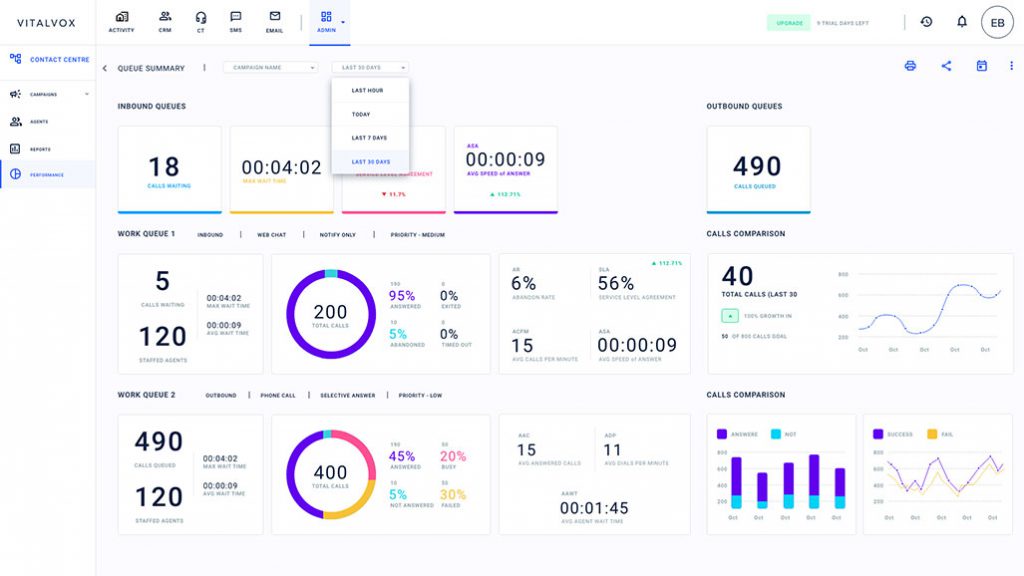
It’s not enough to track contact center performance metrics—you need to act on them. High-performing teams use dashboards, performance reviews, and trend analysis to turn metrics into meaningful decisions. In fact, those that consistently review KPIs are more agile and resilient in the face of changing customer needs.

Furthermore, when agents understand how their performance connects to KPIs, they become more engaged and accountable.


Frequently Asked Questions (FAQs)

Q1: How often should contact center KPIs be reviewed?
A1: Weekly reviews are common, with monthly deep dives. Real-time dashboards are even better for continuous improvement.

Q2: What is a good first call resolution rate?
A2: A strong FCR rate typically ranges between 70 and 80%, though this varies by industry.

Q3: Can AI improve contact center performance metrics?
A3: Yes. AI can automate routine tasks, reduce handling time, and assist agents with real-time suggestions.

Q4: Is a low average handle time always a good thing?
A4: Not necessarily. The goal is to resolve issues efficiently without compromising service quality.

Q5: How do you reduce abandonment rates?
A5: Strategies include shortening wait times, improving routing logic, and offering callback options.


Contact Us

Need help implementing the right contact center performance metrics? Our experts specialize in KPI optimization, real-time reporting solutions, and contact center strategy.
Let’s turn your data into results—reach out today.

Book a Free Demo

Fill in the form below for a free consultation.